Mostrando entradas con la etiqueta Mucocele. Mostrar todas las entradas

martes, 5 de mayo de 2026

Mucocele: Causes, Diagnosis, and Treatment Guide

Mucocele

Oral mucocele is a common benign lesion of the minor salivary glands, frequently observed in pediatric and young adult populations. It results from mucus extravasation or retention, typically following trauma.

📌 Recommended Article :
Dental Article 🔽 Mucocele vs. Ranula: Clinical Differences, Etiology, and Management ... Although both result from salivary mucus extravasation or retention, they differ in anatomical location, clinical behavior, and therapeutic approach.
This article provides an updated, evidence-based overview of clinical features, etiology, differential diagnosis, and treatment approaches for oral mucoceles.

Advertisement

Introduction
A mucocele is defined as a mucus-filled cyst-like lesion occurring in the oral cavity, most commonly affecting the lower lip. Although benign, it can interfere with speech and mastication when enlarged. Understanding its pathophysiology and management is essential for accurate diagnosis and prevention of recurrence.

📌 Recommended Article :
Dental Article 🔽 Precancerous Oral Lesions vs Oral Cancer: Clinical Features, Diagnosis, and Management ... Precancerous oral lesions and oral cancer represent a continuum of pathological changes within the oral mucosa. Early recognition is essential to reduce morbidity and mortality.
Clinical Characteristics
Oral mucoceles present with distinctive features:

▪️ Bluish, translucent swelling
▪️ Soft, fluctuant consistency
▪️ Typically painless
▪️ Size varies from a few millimeters to several centimeters
▪️ Common location: lower labial mucosa
▪️ May exhibit spontaneous rupture and recurrence

Two main types are described:
▪️ Extravasation mucocele (most common): due to mucus leakage into surrounding tissues
▪️ Retention mucocele: caused by ductal obstruction

📌 Recommended Article :
Dental Article 🔽 Blandin–Nuhn Mucocele: Etiology, Clinical Features, and Effective Management ... These lesions represent a subtype of oral mucoceles and are caused by extravasation of mucus following trauma or ductal disruption.
Etiology
The development of mucoceles is associated with:

▪️ Mechanical trauma (lip biting, orthodontic appliances)
▪️ Damage to salivary gland ducts
▪️ Obstruction due to mucus plugs or sialoliths (less common)
Trauma-induced rupture of salivary ducts is the most frequent cause, leading to mucus accumulation in connective tissues.

📌 Recommended Article :
Dental Article 🔽 Dental Fistula in Children: Causes, Diagnosis, and Evidence-Based Treatment ... A dental fistula in children—also known as a parulis or gum boil—is a pathological drainage pathway that forms as a result of a chronic dental infection, usually originating from pulp necrosis due to deep caries or trauma.
Differential Diagnosis
Accurate diagnosis requires differentiation from other oral lesions:

▪️ Fibroma (firm, non-fluctuant lesion)
▪️ Hemangioma (vascular lesion, blanches under pressure)
▪️ Lipoma (soft, yellowish mass)
▪️ Salivary gland neoplasms (rare but clinically significant)
▪️ Ranula (mucocele in the floor of the mouth)
Clinical examination combined with history of trauma is key for differentiation.

📌 Recommended Article :
Dental Article 🔽 Oral Fibroma, Oral Papilloma, and Pyogenic Granuloma in Children: Clinical Features, Diagnosis, and Management ... This article discusses oral fibroma, oral papilloma, and pyogenic granuloma in children, with emphasis on etiology, clinical features, diagnostic criteria, and evidence-based management suitable for the pediatric population.
Diagnosis
Diagnosis is primarily clinical, based on lesion appearance and patient history. However:

▪️ Ultrasound or MRI may be used in atypical cases
▪️ Histopathological examination confirms diagnosis after excision
- Extravasation type shows mucus pools without epithelial lining
- Retention type shows true cyst with epithelial lining

📌 Recommended Article :
Dental Article 🔽 Diseases Transmitted Through Kissing: Oral and Systemic Infections in Children and Adults ... Viruses and bacteria present in saliva can be transmitted through kissing, particularly when oral lesions, gingival inflammation, or immature immune systems are present.
Treatment Options

1. Surgical Excision (Gold Standard)
▪️ Complete removal of lesion and associated minor salivary glands
▪️ Low recurrence rate when properly performed

2. Marsupialization
▪️ Indicated for larger lesions
▪️ Reduces risk of tissue damage

3. Laser Therapy
▪️ Minimally invasive
▪️ Reduced bleeding and faster healing

4. Cryotherapy
▪️ Alternative in selected cases

5. Observation
▪️ Small mucoceles may resolve spontaneously, especially in children

📌 Recommended Article :
Dental Article 🔽 Recurrent Oral Ulcers in Children: Etiology and Management (Recurrent Aphthous Stomatitis) ... Recurrent aphthous stomatitis (RAS) is the most common cause of recurrent oral ulcers in children, characterized by painful ulcerations affecting oral mucosa without systemic disease.
💬 Discussion
Mucocele management depends on lesion size, duration, and recurrence. While many lesions are self-limiting, persistent or recurrent mucoceles require surgical intervention. Failure to remove adjacent minor salivary glands is a common cause of recurrence.
Advances in laser-assisted surgery have improved patient comfort and reduced postoperative complications. However, conventional excision remains the most widely accepted and accessible treatment.

🎯 Clinical Recommendations
▪️ Perform thorough clinical examination and history taking
▪️ Avoid misdiagnosis with vascular or neoplastic lesions
▪️ Opt for complete surgical removal in recurrent cases
▪️ Educate patients about habit control (e.g., lip biting)
▪️ Schedule follow-up visits to monitor recurrence

✍️ Conclusion
Oral mucocele is a benign but recurrent lesion requiring accurate diagnosis and appropriate management. Surgical excision remains the gold standard, while minimally invasive techniques offer promising alternatives. Early intervention and proper technique are essential to prevent recurrence and ensure optimal outcomes.

📚 References

✔ Baurmash, H. D. (2003). Mucoceles and ranulas. Journal of Oral and Maxillofacial Surgery, 61(3), 369–378. https://doi.org/10.1053/joms.2003.50074
✔ Chi, A. C., Lambert, P. R., Richardson, M. S., & Neville, B. W. (2010). Oral mucoceles: a clinicopathologic review. Journal of Oral and Maxillofacial Surgery, 68(5), 1086–1090. https://doi.org/10.1016/j.joms.2009.09.036
✔ Neville, B. W., Damm, D. D., Allen, C. M., & Chi, A. C. (2016). Oral and Maxillofacial Pathology (4th ed.). Elsevier.
✔ Regezi, J. A., Sciubba, J. J., & Jordan, R. C. K. (2017). Oral Pathology: Clinical Pathologic Correlations (7th ed.). Elsevier.

📌 More Recommended Items

Tongue Cancer: Early Warning Signs, Prevention, and the Role of Self-Examination
What Are Fordyce Granules? Should You Be Concerned About Contagion?
What Does Strawberry Gingivitis Indicate in Oral Health?

miércoles, 11 de febrero de 2026

Mucocele vs. Ranula: Clinical Differences, Etiology, and Management

Mucocele - Ranula

Mucocele and ranula are common benign lesions of the salivary glands that frequently present in dental and oral medicine practice. Although both result from salivary mucus extravasation or retention, they differ in anatomical location, clinical behavior, and therapeutic approach.

📌 Recommended Article :
Dental Article 🔽 Oral Mucocele in Pediatric Patients: Clinical Features and Surgical Management ... Mucoceles are mucous-filled cystic lesions primarily resulting from trauma to minor salivary glands. They commonly appear in children and adolescents, particularly on the lower lip.
Accurate differentiation is essential to ensure proper diagnosis, treatment planning, and recurrence prevention.

Advertisement

Definition and Clinical Characteristics

Mucocele
A mucocele is a mucus-filled cystic lesion arising from minor salivary glands, typically due to mechanical trauma causing ductal rupture.

Key clinical features:
▪️ Soft, fluctuant, dome-shaped swelling
▪️ Bluish or translucent appearance
▪️ Commonly located on the lower lip, buccal mucosa, or ventral tongue
▪️ Usually painless and variable in size

Ranula
A ranula is a larger mucous lesion originating from the sublingual gland, located in the floor of the mouth. It represents a specific type of mucocele with deeper anatomical involvement.

Key clinical features:
▪️ Unilateral, bluish swelling in the floor of the mouth
▪️ May elevate the tongue or interfere with speech and swallowing
▪️ Can extend into the neck (plunging ranula)

📌 Recommended Article :
Dental Article 🔽 Blandin–Nuhn Mucocele: Etiology, Clinical Features, and Effective Management ... These lesions represent a subtype of oral mucoceles and are caused by extravasation of mucus following trauma or ductal disruption.
Etiology and Pathogenesis
Both lesions develop due to salivary flow disruption, but their mechanisms differ:

▪️ Mucocele: Most commonly caused by trauma or lip biting, leading to mucus extravasation into surrounding connective tissue.
▪️ Ranula: Typically results from ductal obstruction or rupture of the sublingual gland, with mucus accumulation in deeper anatomical planes.
The absence of an epithelial lining in most cases classifies them as pseudocysts.

📌 Recommended Article :
Dental Article 🔽 Recurrent Oral Ulcers in Children: Etiology and Management (Recurrent Aphthous Stomatitis) ... Recurrent aphthous stomatitis (RAS) is the most common cause of recurrent oral ulcers in children, characterized by painful ulcerations affecting oral mucosa without systemic disease.
Diagnosis
Diagnosis is primarily clinical, supported by imaging when necessary.

▪️ Mucocele: Clinical examination is usually sufficient.
▪️ Ranula: Ultrasound, CT, or MRI may be required to determine lesion extension, especially in suspected plunging ranula.
Histopathological analysis confirms diagnosis and excludes salivary gland neoplasms.

📌 Recommended Article :
Dental Article 🔽 Mouth Sores or Canker Sores? How to Tell the Difference and Heal Faster ... Mouth sores are common lesions that can appear on the oral mucosa and often cause discomfort when eating, speaking, or brushing. Among these, canker sores (aphthous ulcers) are the most frequent.
Treatment Options

Mucocele
▪️ Surgical excision of the lesion and associated minor salivary glands
▪️ Marsupialization in selected cases
▪️ Low recurrence when excision is complete

Ranula
▪️ Surgical removal of the sublingual gland is considered the gold standard
▪️ Simple drainage alone is associated with high recurrence rates
▪️ Plunging ranulas require combined intraoral and cervical approaches

📊 Comparative Table: Mucocele vs. Ranula – Key Clinical Differences

Clinical Feature Mucocele Ranula
Primary gland involved Minor salivary glands Sublingual gland
Common location Lower lip and buccal mucosa Floor of the mouth
Size Small to moderate Often large
Risk of recurrence Low after proper excision High if sublingual gland is not removed
Potential complications Minimal Airway or swallowing interference
💬 Discussion
Although mucocele and ranula share similar histopathological characteristics, their clinical behavior and management differ significantly. Ranulas require more aggressive treatment due to deeper glandular involvement and higher recurrence rates. Misdiagnosis or incomplete treatment may lead to repeated lesions and functional impairment.

📌 Recommended Article :
Dental Article 🔽 Congenital Syphilis: Dental Manifestations – Hutchinson Incisors and Mulberry Molars ... Among the most characteristic features are Hutchinson incisors and mulberry (Moon) molars, which reflect systemic disruption during tooth development caused by Treponema pallidum infection.
🎯 Recommendations
▪️ Perform thorough clinical examination and imaging when indicated
▪️ Avoid simple drainage as definitive treatment for ranula
▪️ Submit all excised lesions for histopathological analysis
▪️ Educate patients on trauma-related risk factors

✍️ Conclusion
Mucocele and ranula are distinct salivary gland disorders that require accurate diagnosis and tailored management. Understanding their anatomical origin, clinical presentation, and evidence-based treatment options allows clinicians to reduce recurrence and optimize patient outcomes.

📚 References

✔ Neville, B. W., Damm, D. D., Allen, C. M., & Chi, A. C. (2016). Oral and maxillofacial pathology (4th ed.). Elsevier.
✔ Zhao, Y. F., Jia, Y., Chen, X. M., & Zhang, W. F. (2004). Clinical review of 580 ranulas. Oral Surgery, Oral Medicine, Oral Pathology, Oral Radiology, and Endodontology, 98(3), 281–287. https://doi.org/10.1016/j.tripleo.2004.03.006
✔ Baurmash, H. D. (2003). Mucocele and ranula. Journal of Oral and Maxillofacial Surgery, 61(3), 369–378. https://doi.org/10.1053/joms.2003.50074

📌 More Recommended Items

What Are the Oral Manifestations in Oncology Patients? : Early and Advanced Manifestations
What Are Fordyce Granules? Should You Be Concerned About Contagion?
Traumatic White Lesions in the Pediatric Oral Cavity: Diagnosis, Prevention and Evidence-Based Treatment

sábado, 8 de julio de 2023

Ránulas y Mucoceles: Diferencias, características, causas y tratamiento

Medicina Bucal

Las glándulas salivales son glándulas exocrinas que producen y segregan saliva en la cavidad bucal. Se clasifican como glándulas salivales mayores (sublinguales, parótida y submaxilar) y glándulas menores que se encuentran distribuidas en la mucosa oral.

📌 Artículo Recomendado:
Descargue el PDF 🔽 Patologías orales en pacientes pediátricos - Webinar ... webinar que nos habla sobre las diferentes patologías orales que puede presentar un niño, convirtiéndose este vídeo en una herramienta o guía de diagnóstico

La ránula y el mucocele son pequeñas tumoraciones transparentes e indoloras de contenido mucoso, que pueden ser congénitos o producto de un traumatismo por lo general son pequeñas, y aparecen en cualquier zona de la cavidad bucal.

Enlaces Patrocinados

Compartimos un vídeo que nos enseña cuales son las características y diferencias del mucocele y la ránula, así como las causas y tratamiento adecuado.

📌 Artículo Recomendado:
Artículo PDF 🔽 Mucocele labial en paciente pediátrico. Características y procedimiento quirúrgico ... La causa de este fenómeno se relaciona con traumatismo mecánicos de los conductos de las glándulas salivales menores

📌 Vea el vídeo: "Mucocele: ¿qué es y cómo se trata?"


Fuente: Youtube/ CLÍNICA DE ORTODONCIA AVANZADA
📌 Más artículos recomendados 

Patología de las glándulas salivales en la infancia
¿Por qué me salio un bulto debajo de la lengua?
¿Cómo se retira un torus mandibular? - Paso a paso

sábado, 1 de julio de 2023

Mucocele: Características clínicas, causas y tratamiento - Caso clínico

Medicina Bucal

El mucocele es una lesión benigna de retención mucosa (quiste) que aparece en la cavidad oral. El contenido es mucoso porque proviene de las glándulas salivales menores que han sufrido algún trauma.

📌 Artículo Recomendado:
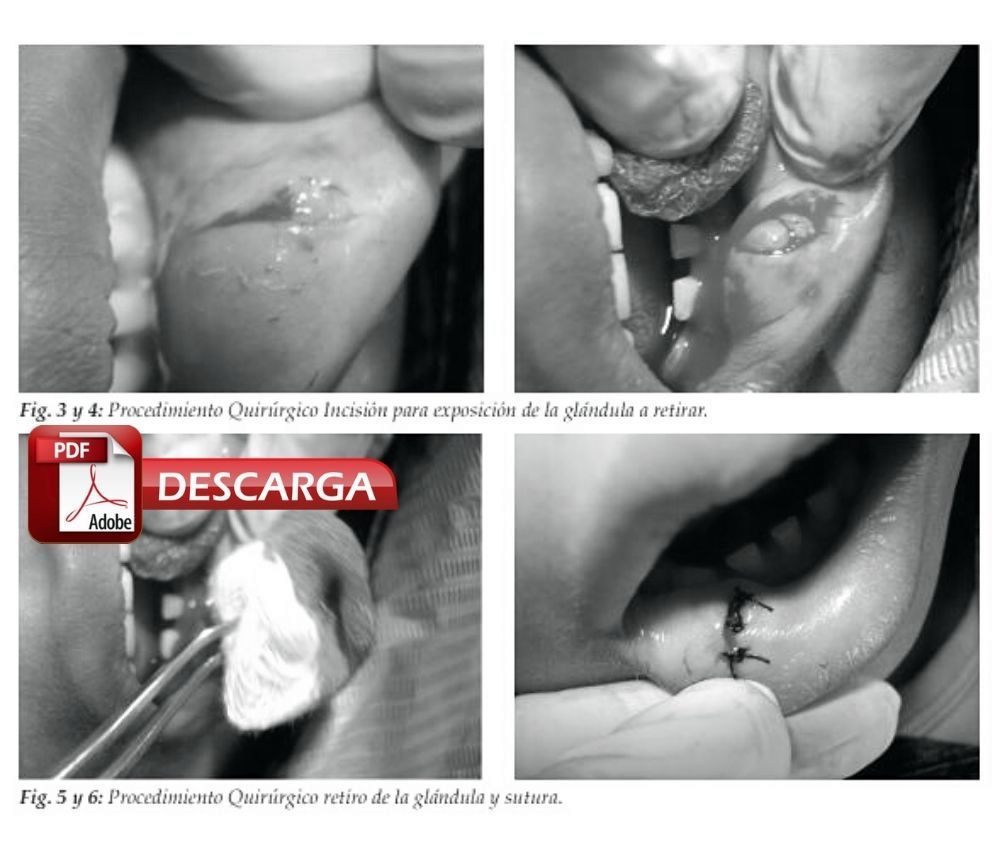
Descargue el PDF 🔽 Mucocele labial en paciente pediátrico. Características y procedimiento quirúrgico ... Compartimos un artículo que reporta la evaluación, diagnóstico diferencial y procedimiento quirúrgico de un paciente pediátrico con mucocele labial

El mucocele puede presentarse de manera única o múltiple y de varios tamaños, por lo general en el labio inferior. Es translúcido con tintes azulados, y el tratamiento es quirúrgico.

Enlaces Patrocinados

Conozcamos las características y tratamiento del mucocele y la presentación de un caso clínico en un paciente pediátrico.

📌 Vea el vídeo: "Mucocele: ¿qué es y cómo se trata?"


Fuente: Youtube/ Dra. Camila Palma

📌 Lea y Descargue el artículo en PDF :


Mucocele en la mucosa labial. M. Valdivielso-Ramos, et al. Acta Pediatr Esp. 2008; 66(10): 502-503

📌 Más artículos recomendados 

Lesiones orales frecuentes en pacientes pediátricos - Características y tratamiento
Patología de las glándulas salivales en la infancia
¿Qué son las "encías en fresa"? - Características e importancia en su detección temprana

sábado, 29 de abril de 2023

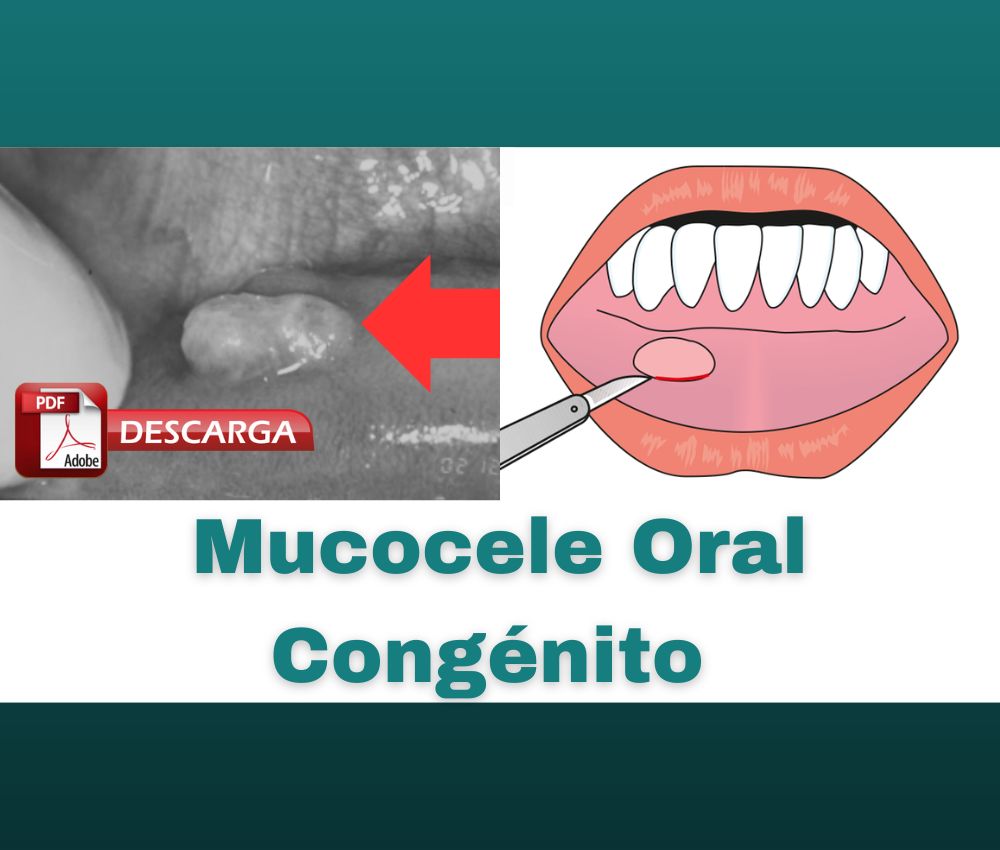
Mucocele oral congénito - Causas y Tratamiento - Casos clínicos

Mucocele

El mucocele es una lesión que se observa como un bulto de contenido mucoso, a partir de una lesión en las glándulas salivales menores. El mucocele puede ser de diferentes tamaños y por lo general se ubican en la cara interna del labio inferior.

📌 Artículo Recomendado:
Vea el vídeo 🔽 Ránula sublingual en paciente pediátrico - Manejo multidisciplinario ... El tratamiento a elegir es el procedimiento quirúrgico (marsupialización). Previamente se realiza una correcta anamnesis y evaluación clínica

El mucocele puede presentarse luego de un trauma o por obstrucción ductal. Es de color azulado, sésil y fluctuante. En casos no desaparezca con el tiempo, se debe realizar un procedimiento quirúrgico.

Enlaces Patrocinados

El mucocele oral congénito es una lesión poco frecuente, conozca cuales son sus causas y tratamiento en bebés, a propósito de los casos clínicos que compartimos.

📌 LEA Y DESCARGUE EL ARTÍCULO EN PDF: "Mucoceles orales congénitos. Casos Clínicos" AQUÍ 👇


C. Bonet Coloma, J. Ata-Ali Mahmud, I. Minguez Martinez, M.A. Penarrocha. Anales de Pediatría. Asociación Española de Pediatría Vol. 75. Núm. 6. páginas 424-425 (Diciembre 2011)

📌 También te puede interesar :
Mucocele labial en paciente pediátrico. Características y procedimiento quirúrgico
Patología de las glándulas salivales en la infancia
Lesiones orales frecuentes en pacientes pediátricos - Características y tratamiento

martes, 17 de mayo de 2022

Mucocele labial en paciente pediátrico. Características y procedimiento quirúrgico

Mucocele

El mucocele es una de las patologías mas frecuentes que afectan las glándulas salivales menores, y consiste en un quiste con contenido mucoso a partir de un trauma en la mucosa oral. Por lo general se presentan en niños y adultos jóvenes.

Se presentan como una o más pápulas pequeñas de color azulado y frecuentemente en el labio inferior, pero también puede presentarse en el carrillo, lengua y piso de boca. Un correcto diagnostico diferencial puede descartar un carcinoma o tumor benigno.

Enlaces Patrocinados

Compartimos un artículo que reporta la evaluación, diagnóstico diferencial y procedimiento quirúrgico de un paciente pediátrico con mucocele labial.

Mucocele


Mucocele de labio: reporte de caso. Wilbert-Chirinos-Llerena1 Vol 2 Nº 1 Enero-Junio 2012

También te puede interesar :
Ránula sublingual en paciente pediátrico - Manejo multidisciplinario
Patología de las glándulas salivales en la infancia
¿Qué es la Enfermedad de Riga-Fede?

sábado, 4 de julio de 2020

MUCOCELE labial: relato de caso em criança de dois anos de idade

Mucocele

Mucoceles são lesões comuns da mucosa oral que, quando de origem traumática, caracterizam-se pelo rompimento do ducto de uma glândula salivar menor e o acúmulo de mucina no tecido subjacente. Estas lesões podem ocorrer em qualquer idade, sendo mais observado em crianças e adultos jovens.

O objetivo deste trabalho será relatar um caso clínico de mucocele, por extravasamento de muco, em uma criança de 2 anos de idade, onde a lesão se desenvolveu após um trauma no local. A abordagem clínica do caso, bem como o tratamento, serão relatados e discutidos.

Enlaces Patrocinados

O presente caso diz respeito a um paciente do sexo masculino, leucoderma, 2 anos de idade, trazido pela mãe na Clínica de Odontopediatria da ULBRA. A mãe relatou como motivo da consulta a presença de uma “bolinha” no lábio inferior da criança.

anestesia dentária


Durante anamnese, foi constatada a história de aparecimento de lesão assintomática na mucosa labial inferior, há aproximadamente dois meses, após a criança ter traumatizado o local no momento de uma queda.


°redalyc.org
°Stomatos
°Jean Sául Crivellaro / Henrique Castilhos Ruschel / Tatiana Andrea Soares Pinto / Simone Helena Ferreira

También te puede interesar :
Quando é indicada uma pulpectomia?
BRUXISMO na infância: um sinal de alerta para odontopediatras e pediatras
Principais tumores odontogênicos que podem acometer a cavidade bucal de crianças