Losing a tooth affects much more than your smile. It can change the way you chew, speak, and even lead to bone loss over time. Fortunately, modern dentistry offers two highly effective solutions: dental implants and dental bridges.
📌 Recommended Article :
Dental Article 🔽 Causes and Complications of Dental Implant Failure ... This article explores the main causes, complications, and preventive measures to ensure predictable outcomes in dental implant therapy.Both treatments restore missing teeth successfully, but they work differently and are suitable for different situations. Understanding their advantages, limitations, and long-term outcomes can help you make an informed decision together with your dentist.
Advertisement
✅ What Is a Dental Implant?
A dental implant is a small titanium or zirconia post placed into the jawbone to replace the root of a missing tooth. Once it integrates with the bone through a natural healing process called osseointegration, a custom-made dental crown is attached.
Main Benefits
▪️ Preserves jawbone by stimulating bone like a natural tooth root.
▪️ Does not require grinding neighboring teeth.
▪️ Excellent stability and chewing function.
▪️ Very natural appearance.
▪️ Can last 20 years or longer, often a lifetime with proper care.
Possible Limitations
▪️ Higher initial cost.
▪️ Requires sufficient bone volume.
▪️ Healing takes several months.
▪️ Minor surgical procedure is necessary.
📌 Recommended Article :
Dental Article 🔽 Porcelain vs Zirconia vs Lithium Disilicate Veneers: Which Material Is Best in 2026? ... This article provides a comparative, evidence-based analysis of feldspathic porcelain, lithium disilicate, and zirconia veneers, emphasizing indications, preparation requirements, adhesion protocols, and clinical longevity.✅ What Is a Dental Bridge?
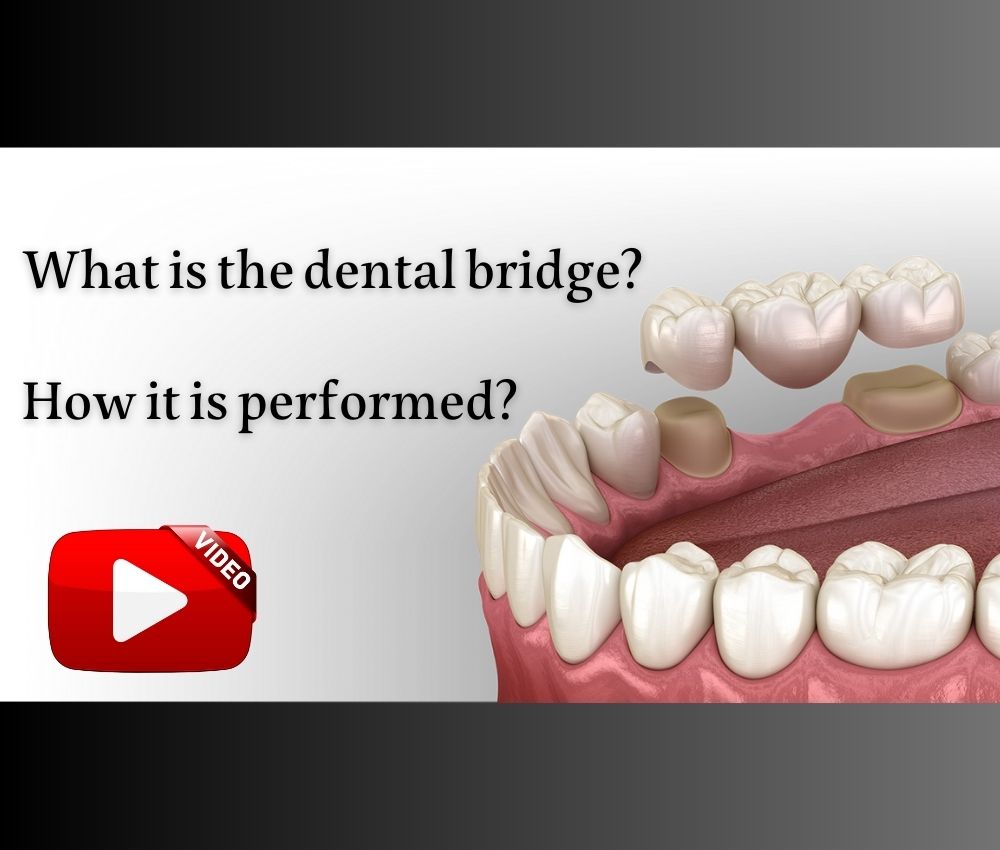
A dental bridge replaces one or more missing teeth by attaching an artificial tooth (pontic) to crowns placed on the neighboring teeth.
Unlike implants, bridges rely on adjacent teeth for support instead of replacing the missing root.
Main Benefits
▪️ Usually completed within a few weeks.
▪️ No surgery required.
▪️ Lower initial cost.
▪️ Effective when neighboring teeth already need crowns.
Possible Limitations
▪️ Healthy adjacent teeth often need reshaping.
▪️ Does not prevent jawbone loss beneath the missing tooth.
▪️ May require replacement after 10–15 years.
▪️ Increased cleaning difficulty under the bridge.
📌 Recommended Article :
Dental Article 🔽 Step-by-Step Dental Implants: A Guide for Patients ... This comprehensive guide provides information based on certified and verifiable sources, aimed at patients considering this treatment.✅ Dental Implants vs. Bridges: Key Differences
1. Bone Preservation
Dental implants help maintain jawbone volume because they replace the tooth root.
Dental bridges do not stimulate the bone, allowing gradual bone resorption over time.
2. Impact on Nearby Teeth
One of the biggest advantages of implants is that they leave neighboring teeth untouched.
Bridges usually require preparing adjacent teeth, which may remove healthy enamel.
3. Durability
With proper oral hygiene and regular dental visits:
▪️ Implants frequently last 20–30 years or more.
▪️ Bridges commonly last 10–15 years, although many perform well for longer with excellent care.
4. Treatment Time
▪️ Bridges
Typically completed within 2–4 weeks.
▪️ Implants
Usually require 3–6 months, depending on healing and whether bone grafting is necessary.
5. Cost
Bridges generally have a lower upfront cost.
Implants cost more initially but often become more cost-effective over the long term because of their longevity and reduced need for replacement.
6. Oral Hygiene
Implants are cleaned similarly to natural teeth using brushing and floss.
Bridges require special floss threaders or interdental brushes to clean beneath the artificial tooth.
📌 Recommended Article :
Video 🔽 Dental Bridges: Step by Step Procedure ... There are several ways to replace missing teeth, such as removable dentures, dental bridges, and implants. There are several types of dental bridges and must be previously evaluated by the dentist.✅ Who Is a Good Candidate?
Dental Implants May Be Better If You:
▪️ Have healthy gums.
▪️ Have enough jawbone.
▪️ Want the longest-lasting solution.
▪️ Prefer preserving neighboring teeth.
▪️ Do not smoke heavily or are willing to quit during healing.
Dental Bridges May Be Better If You:
▪️ Need a faster treatment.
▪️ Cannot undergo surgery.
▪️ Have medical conditions limiting implant placement.
▪️ Already need crowns on neighboring teeth.
▪️ Have financial limitations.
📌 Recommended Article :
Video 🔽 Dental Implants Post-Op Instructions ... Before starting the surgical procedure to place dental implants, the dentist must make a series of recommendations to the patient. These recommendations ensure an optimal healing process.✅ Which Option Looks More Natural?
Both treatments can provide excellent esthetics when properly planned.
However, dental implants often create the most natural appearance because they emerge from the gums similarly to natural teeth and help preserve the surrounding bone and soft tissues.
📌 Recommended Article :
Dental Article 🔽 What Are the Pros and Cons of Flexible Dentures? ... Flexible dentures have become a widely used alternative to traditional metal–acrylic removable partial dentures (RPDs). Their aesthetic advantages and improved comfort make them attractive to many patients.✅ Can Dental Implants Fail?
Yes, but success rates are very high.
Current evidence reports implant survival rates above 95% over 10 years in healthy patients receiving appropriate maintenance.
Common risk factors include:
▪️ Smoking
▪️ Poor oral hygiene
▪️ Uncontrolled diabetes
▪️ Untreated periodontal disease
📌 Recommended Article :
Dental Article 🔽 Common Problems with Dental Implants: Signs, Symptoms, and Management ... These complications include failures in osteointegration, peri-implant diseases, mechanical failures, soft-tissue complications, and damage to surrounding anatomical structures.🎯 Recommendations
▪️ Choose dental implants if you are looking for the most durable, bone-preserving, and natural-feeling solution.
▪️ Choose a dental bridge if you need a faster treatment, cannot receive surgery, or already require crowns on neighboring teeth.
▪️ Maintain excellent oral hygiene regardless of the treatment selected.
▪️ Attend regular dental checkups for professional maintenance and early detection of complications.
▪️ Discuss your overall health, bone quality, and budget with your dentist before making a final decision.
💬 Discussion
The question is not whether implants or bridges are universally better, but which option best fits each individual patient.
Scientific evidence consistently supports dental implants as the preferred treatment when conditions allow because they preserve bone, avoid damaging adjacent teeth, and offer excellent long-term survival. Nevertheless, dental bridges remain a reliable and predictable alternative, particularly for patients seeking shorter treatment times or those who are not suitable candidates for implant surgery.
A personalized evaluation remains essential to achieve the best functional and aesthetic outcome.
✍️ Conclusion
Both dental implants and dental bridges are effective methods for replacing missing teeth. Dental implants generally provide superior long-term outcomes by preserving bone, protecting adjacent teeth, and offering exceptional durability. However, dental bridges continue to be an excellent solution for selected patients due to their shorter treatment time and lower initial cost. The best choice depends on your oral health, medical history, budget, and personal expectations.
📊 Summary Table: Dental Implants vs. Dental Bridges
| Comparison Factor | Dental Implants | Dental Bridges |
|---|---|---|
| Support | Anchored directly into the jawbone | Supported by neighboring teeth |
| Bone Preservation | Helps maintain jawbone volume | Does not prevent bone loss |
| Adjacent Teeth | No preparation needed | Usually requires reshaping healthy teeth |
| Treatment Time | Usually 3–6 months | Usually 2–4 weeks |
| Longevity | Often 20+ years or lifetime with proper care | Typically 10–15 years |
| Initial Cost | Higher | Lower |
| Maintenance | Similar to natural teeth | Requires cleaning underneath the bridge |
| Best For | Long-term tooth replacement and bone preservation | Patients seeking faster treatment or avoiding surgery |
📚 References
✔ American Academy of Periodontology. (2023). Dental implants. https://www.perio.org/for-patients/dental-implants/
✔ American Dental Association. (2024). Implants. https://www.mouthhealthy.org/all-topics-a-z/implants
✔ Pjetursson, B. E., & Lang, N. P. (2008). Prosthetic treatment planning on the basis of scientific evidence. Journal of Oral Rehabilitation, 35(Suppl. 1), 72–79. https://doi.org/10.1111/j.1365-2842.2007.01824.x
✔ Jung, R. E., Zembic, A., Pjetursson, B. E., Zwahlen, M., & Thoma, D. S. (2012). Systematic review of the survival rate and incidence of biologic, technical, and esthetic complications of single crowns on implants reported in longitudinal studies with a mean follow-up of 5 years. Clinical Oral Implants Research, 23(Suppl. 6), 2–21. https://doi.org/10.1111/j.1600-0501.2012.02547.x
✔ Cosyn, J., De Lat, L., Seyssens, L., Doornewaard, R., Deschepper, E., & Vervaeke, S. (2019). The effectiveness of immediate implant placement for single tooth replacement compared to delayed implant placement: A systematic review and meta-analysis. Journal of Clinical Periodontology, 46(Suppl. 21), 224–241. https://doi.org/10.1111/jcpe.13053
📌 More Recommended Items
► Prevention of peri-implantitis - 3D Video
► What Is Preprosthetic Surgery? Importance, Indications, and Clinical Outcomes in Modern Dentistry
► Oral lesions related to dentures