Mostrando entradas con la etiqueta Receding gums. Mostrar todas las entradas

jueves, 24 de julio de 2025

Gum Recession: Causes, Consequences, and the Most Effective Treatments in 2025

Gum Recession

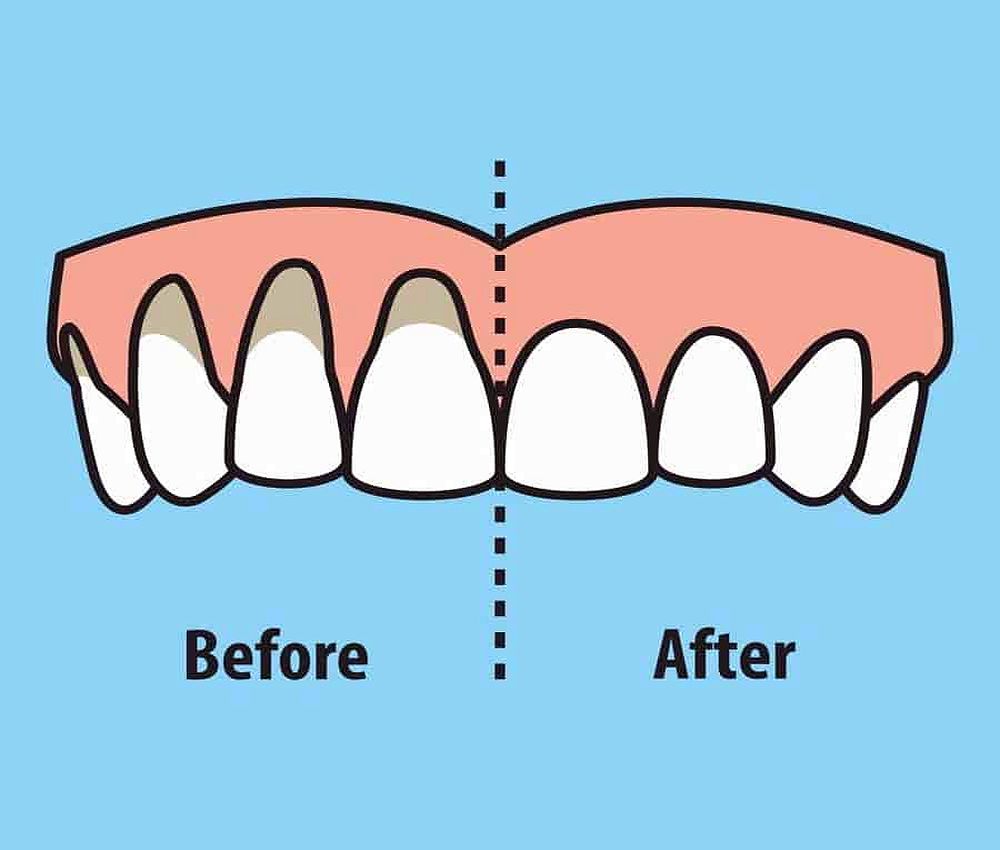
Gum recession is a common oral health issue that involves the apical migration of the gum margin, exposing the root surface of the tooth. While often unnoticed in early stages, it can lead to both cosmetic and functional problems.

📌 Recommended Article :
Video 🔽 Diabetes and gum health - Periodontitis ... A person with diabetes increases the risk of suffering from periodontal disease, even losing one or more teeth more quickly.
This article explores the most common causes, health consequences, and evidence-based treatments available in 2025.

Advertisement

✅ What Is Gum Recession?
Gum recession refers to the progressive loss of gum tissue surrounding the teeth, resulting in visible root surfaces. It may affect a single tooth or multiple teeth. The Cairo classification (2011) is currently the most widely used clinical system to describe its severity and predict treatment outcomes.

📌 Recommended Article :
Video 🔽 What to expect after periodontal surgery - Post-Operative Guide ... Periodontal surgery is one of the phases of gum treatment, and is responsible for the surgical procedure of the gums that are affected by periodontitis.
✅ Common Causes of Gum Recession
Gum recession is multifactorial, and its most common causes include:

1. Aggressive Toothbrushing
° Using excessive force or horizontal scrubbing
° Hard-bristled toothbrushes or abrasive toothpaste

2. Periodontal Disease
° Chronic inflammation and destruction of connective tissue
° Bone loss and periodontal pockets

3. Tooth Misalignment
° Teeth positioned outside the bone housing
° Orthodontic movement without periodontal planning

4. High Frenum Attachment or Muscle Pulls
° Mechanical interference in the attached gingiva

5. Thin Gingival Biotype
° Thin gums are more prone to trauma and retraction

6. Smoking and Oral Piercings
° Chronic irritation and reduced blood supply to the gums

📌 Recommended Article :
Video 🔽 Risk of gum disease for smokers ... Periodontitis is the destruction of the supporting elements of the teeth (bone and periodontal ligaments), it begins with bleeding and inflammation of the gums, and without treatment it can lead to the total loss of the tooth.
✅ Health Risks and Consequences of Gum Recession
If left untreated, gum recession can lead to:

° Tooth sensitivity (especially to cold or brushing)
° Root surface cavities
° Progressive periodontal attachment loss
° Cosmetic concerns (exposed roots, black triangles)
° Difficulties with oral hygiene
° Emotional distress related to smile aesthetics

📌 Recommended Article :
Video 🔽 Do You Have Gingivitis or Periodontitis? | Different Stages Of Gum Disease ... Periodontal disease are the pathologies that affect the gums, generally caused by poor oral hygiene. It is important to treat these conditions before they get worse and we can lose the tooth.
✅ Evidence-Based Treatments for Gum Recession (2025 Update)

1. Addressing Traumatic Habits
° Patient education on non-traumatic brushing techniques
° Using soft or ultra-soft brushes and non-abrasive toothpaste

2. Non-Surgical Periodontal Therapy
° Scaling and root planing (SRP) in cases involving inflammation
° Regular plaque control and maintenance visits

3. Mucogingival Surgery (Advanced Regenerative Techniques)
° Subepithelial connective tissue graft (CTG) – gold standard
° Free gingival graft (FGG) – for increasing keratinized tissue
° Tunnel technique with biomaterials – minimally invasive approach
° Acellular dermal matrix grafts – alternative to autogenous tissue
° Platelet-rich fibrin (PRF) – improves healing and outcomes

4. Orthodontic Treatment
° Indicated in cases where misaligned teeth contribute to recession
° Requires coordination between orthodontists and periodontists

📌 Recommended Article :
Video 🔽 Causes of Gum problems with braces ... The orthodontic patient must be informed about the responsibilities that he adopts once he is a holder of braces. The consequences of poor dental hygiene can be very serious.
✅ Clinical Recommendations for U.S. Dental Patients

° Always assess gum thickness and attachment level before starting restorative or orthodontic treatments.
° Educate patients on proper brushing methods and tools.
° Avoid hard bristles, abrasive pastes, or alcohol-based rinses.
° Perform routine periodontal evaluations to catch early signs.
° Refer to a periodontist when aesthetics or severe root exposure are involved.

📌 Recommended Article :
Video 🔽 What is the treatment of receding gums? ... The dentist must identify the causative agent, and then perform the treatment because it is periodontal surgery. The specialist should instruct the patient on his brushing technique so that he can avoid further injury to his gums.
💬 Discussion
Gum recession is often underestimated in dental practice but plays a crucial role in both periodontal health and aesthetics. In 2025, surgical techniques have evolved significantly, offering less invasive procedures with better cosmetic results. Technologies such as PRF and biomimetic materials have improved predictability and healing.
That said, the foundation of long-term success lies in identifying and addressing the underlying causes—especially traumatic brushing or anatomical predispositions. Without this, even the most advanced grafting procedures are likely to fail.

💡 Conclusion
Gum recession is more than a cosmetic issue—it can compromise oral health and patient well-being. Effective treatment depends on the proper diagnosis, behavioral modification, and—in many cases—advanced periodontal surgery. Preventive care and patient education remain key to managing this condition successfully.

References

✔ Cairo, F., Pagliaro, U., & Nieri, M. (2011). Treatment of gingival recession with coronally advanced flap procedures: a systematic review. Journal of Clinical Periodontology, 35(Suppl 8), 136–162. https://doi.org/10.1111/j.1600-051X.2008.01267.x

✔ Chambrone, L., Tatakis, D. N., & Romanelli, H. C. (2018). Root coverage procedures for the treatment of localized recession-type defects: An updated Cochrane systematic review. Journal of Periodontology, 89(7), 760–778. https://doi.org/10.1002/JPER.16-0805

✔ Pini Prato, G. P., Franceschi, D., Cortellini, P., & Chambrone, L. (2020). Mucogingival surgery for the treatment of multiple gingival recessions: A systematic review. Periodontology 2000, 84(1), 315–338. https://doi.org/10.1111/prd.12344

📌 More Recommended Items

► Top Antibiotics and Mouthwashes for Periodontal Treatment: Updated Guide with Doses and Benefits
► Is Gingivitis or Periodontitis Contagious? A Scientific Overview of Transmission, Symptoms, and Microbiota
► Can children suffer from periodontal disease?

martes, 29 de septiembre de 2020

Bruxism - A Major Cause of Gum Recession

Bruxism

The unconscious and nocturnal act of grinding or clenching the teeth is known as bruxism. This pathology is the cause of wear or fractures of the teeth or dental prostheses.

We invite you to our English-only dental publishing groups

🎯 WhatsApp Group All Odontology
🎯 Telegram Group All Odontology
🎯 Facebook Group All Odontology

Another consequence of bruxism is the progressive loss of the maxillary bone, generating a recession of the gums. Bruxism must be treated to avoid its serious consequences that go beyond just a dental problem.

Advertisement

Fortunately, there are treatments for bruxism and for recession of the gums. We recommend visiting your trusted dentist for an evaluation and proper treatment in case you suffer from this disease.

Bruxism


You may also like :
► What is CANKER SORES? - All you need to know
► What is Dry Socket? Symptoms and how to fix it!
► What is tooth sensitivity?


Source: Youtube/ Joseph R Nemeth DDS & Associates

viernes, 19 de junio de 2020

Causes and Treatment of Dental Hypersensitivity: Updated Insights

Dental Hypersensitivity

Dental hypersensitivity (DH) is defined as a transient, sharp pain arising from exposed dentin in response to external stimuli, which cannot be attributed to any other dental pathology.

📌 Recommended Article :
Dental Article 🔽 Teeth Whitening Sensitivity Dos and Don'ts ... The evaluation of the dentist is important before beginning teeth whitening. The evaluation will identify if there are cavities, fractures or receding gums that could increase post-treatment sensitivity.
Its prevalence ranges from 10% to 30% of the population, with higher incidence among young adults and patients with periodontal disease (Addy, 2021). Understanding its multifactorial etiology and implementing appropriate therapeutic approaches are essential for effective management.

Advertisement

✅ Etiology of Dental Hypersensitivity
The most accepted explanation is the hydrodynamic theory, proposed by Brännström, which suggests that fluid movement within dentinal tubules triggers nerve responses leading to pain. Multiple local and systemic factors contribute to DH, often involving dentin exposure and loss of protective enamel or cementum.

📌 Recommended Article :
Dental Article 🔽 How to keep your smile white after teeth whitening ... This academic article provides a detailed, evidence-based guide on how to preserve a white and radiant smile after undergoing teeth whitening.

📊 Causes of Dental Hypersensitivity

Category Specific Causes
Mechanical Aggressive tooth brushing, bruxism, attrition
Chemical Acidic diet (citrus, sodas), gastric reflux, erosion
Periodontal Gingival recession, root exposure, periodontal treatment
Iatrogenic Whitening agents, scaling and root planing

✅ Treatment Approaches
Management of DH requires addressing both symptoms and underlying causes. Current treatments include:

➤ At-home desensitizing agents:
° Potassium nitrate toothpastes (reduce nerve excitability).
° Fluoride-based products (occlude dentinal tubules).

➤ In-office therapies:
° Application of fluoride varnishes or gels.
° Use of desensitizing agents such as arginine-calcium carbonate and casein phosphopeptide-amorphous calcium phosphate (CPP-ACP).
° Laser therapy and resin sealants for severe cases.

➤ Behavioral modifications:
° Education on proper brushing techniques.
° Dietary counseling to reduce acidic food and beverage intake.
° Management of parafunctional habits like bruxism.

📌 Recommended Article :
Dental Article 🔽 Gum Recession: Causes, Consequences, and the Most Effective Treatments in 2025 ... Gum recession is a common oral health issue that involves the apical migration of the gum margin, exposing the root surface of the tooth.
💬 Discussion
Recent research highlights that a multimodal approach is most effective for DH management. While desensitizing agents provide symptomatic relief, long-term success depends on addressing etiological factors such as gingival recession, occlusal trauma, and erosive dietary habits. Laser therapy and biomimetic agents show promising results, but cost and accessibility remain limitations. Furthermore, patient compliance plays a pivotal role in preventing recurrence.

✍️ Conclusion
Dental hypersensitivity is a multifactorial condition with a significant impact on oral health and quality of life. Accurate diagnosis, patient education, and evidence-based treatment strategies are fundamental for successful management. Continuous advances in biomaterials and preventive approaches are expected to enhance long-term outcomes for patients affected by this common condition.

📌 Recommended Article :
Video 🔽 What is tooth sensitivity? ... Tooth sensitivity is evident when you consume a hot or cold food or drink. The pain is sharp and short-lived. There may also be pain from pressure and from chewing food.
📚 References

✔ Addy, M. (2021). Dentine hypersensitivity: New perspectives on an old problem. Journal of Dentistry, 108, 103632. https://doi.org/10.1016/j.jdent.2021.103632

✔ West, N. X., & Seong, J. (2021). Managing dentine hypersensitivity: Challenges and solutions. Clinical Oral Investigations, 25(2), 337–349. https://doi.org/10.1007/s00784-020-03600-5

✔ Bartold, P. M., & Kocher, T. (2022). Periodontal considerations in dentine hypersensitivity. Periodontology 2000, 89(1), 64–78. https://doi.org/10.1111/prd.12437

📌 Watch video: "Tooth Sensitivity -- Causes and Treatments"


Youtube/ Outsource Strategies International

📌 More Recommended Items

► What is the treatment of receding gums?
► Risk of gum disease for smokers
► Why teeth get sensitive? how to fix it?

martes, 2 de junio de 2020

What is the treatment of receding gums?

Receding Gums

Gum retraction is one of the most common pathologies that can be observed in dental offices. The causes are varied and is usually due to the presence of chronic periodontal diseases.

In gingival retractions we can observe a displacement of the gums and bone, exposing the dental roots.

Enlaces Patrocinados

The dentist must identify the causative agent, and then perform the treatment because it is periodontal surgery. The specialist should instruct the patient on his brushing technique so that he can avoid further injury to his gums.

Oral Medicine


You may also like :
► How to identify the early signs of oral cancer
► How to handle dental trauma?
► COVID 19: Children with asthma are at risk?


Source: Youtube/ Helm Nejad Stanley - Dentistry in Beverly Hills and West Hollywood Ca