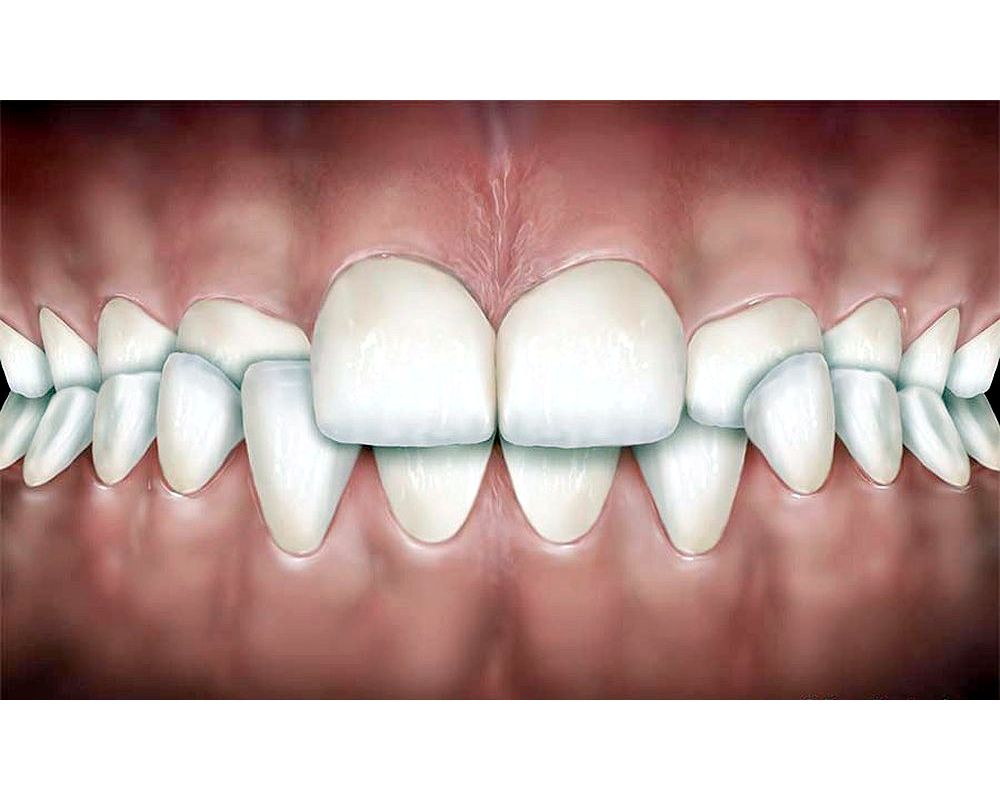
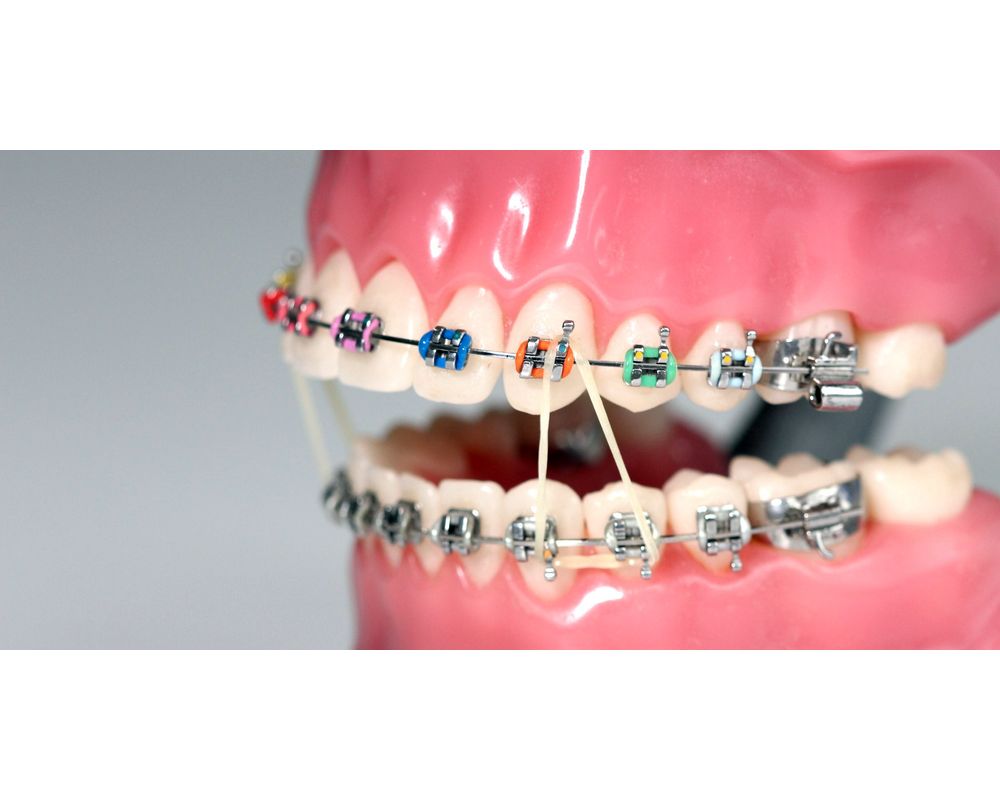
Orthodontic retention is a critical phase of treatment aimed at maintaining tooth alignment achieved through active orthodontic therapy. Despite successful correction of malocclusion, teeth exhibit a natural tendency to return toward their original positions, a phenomenon known as orthodontic relapse.
📌 Recommended Article :
Dental Article 🔽 MBT vs Roth vs Edgewise Brackets: Key Differences in Orthodontic Prescriptions ... These prescriptions differ primarily in the amount of built-in torque, tip, and in-out values, which directly affect tooth positioning and treatment mechanics.This article reviews current scientific evidence regarding the recommended duration of retainer wear, the biological rationale for long-term retention, and the advantages and limitations of different retainer designs.
Advertisement
✅ Introduction
Orthodontic treatment does not end when brackets are removed or aligner therapy is completed. The stability of treatment outcomes depends heavily on the retention phase. Research has consistently demonstrated that dental and periodontal tissues undergo remodeling for months or years after active tooth movement, making retention essential for preserving treatment results.
The question most frequently asked by patients is: How long should orthodontic retainers be worn? Contemporary evidence suggests that retention should be considered a long-term, and often lifelong, commitment.
📌 Recommended Article :
Dental Article 🔽 Orthodontic Retainers: Which Is the Best Option? ... This article reviews the principal types of orthodontic retainers, compares their clinical performance, and discusses evidence-based considerations for selecting the most appropriate retainer according to individual patient needs.✅ Why Are Orthodontic Retainers Necessary?
Biological Justification
Several biological factors contribute to post-treatment relapse:
▪️ Remodeling of periodontal ligament fibers.
▪️ Adaptation of alveolar bone following tooth movement.
▪️ Continued craniofacial growth and aging.
▪️ Occlusal forces and muscular pressures.
▪️ Natural age-related dental changes.
These factors explain why teeth may shift even years after successful orthodontic treatment.
Evidence Supporting Long-Term Retention
Scientific studies have shown that lower incisor crowding tends to increase throughout adulthood, regardless of whether an individual received orthodontic treatment. Consequently, retention protocols have evolved from short-term recommendations to prolonged or permanent retention strategies.
📌 Recommended Article :
Dental Article 🔽 Orthodontic Relapse: Causes, Prevention & Retention ... Relapse is influenced by biological, mechanical, and behavioral factors, including periodontal fiber memory, continued craniofacial growth, unstable tooth movements, and poor compliance with retainers.✅ How Long Should Retainers Be Worn?
Immediate Post-Treatment Phase
Most orthodontists recommend:
▪️ Full-time wear (20–22 hours daily) during the first 3–6 months.
▪️ Removal only during meals and oral hygiene procedures.
This period allows stabilization of periodontal and supporting tissues.
Intermediate Phase
After the initial stabilization period:
▪️ Nighttime wear is generally recommended.
▪️ Duration commonly ranges from 6 months to 2 years.
Long-Term Phase
Current evidence increasingly supports:
Nighttime retainer wear indefinitely or lifelong.
The rationale is straightforward: teeth continue to move throughout life due to biological and functional factors. Patients who discontinue retention entirely have a significantly greater risk of relapse.
📌 Recommended Article :
Dental Article 🔽 Maxillary Orthopedics vs. Interceptive Orthodontics: Key Differences, Similarities, and Treatments ... Maxillary orthopedics and interceptive orthodontics are closely related but distinct fields. While both aim to improve oral and facial harmony in growing patients, their approaches, timing, and appliances differ.✅ Which Retainer Is Most Recommended?
There is no universal retainer suitable for every patient. However, current evidence suggests that a combination approach often provides optimal stability.
Best Evidence-Based Strategy
Many orthodontists prefer:
1. Fixed mandibular retainer for long-term lower incisor stability.
2. Removable maxillary retainer worn nightly.
This combination offers:
▪️ Superior protection against relapse.
▪️ Reduced dependence on patient compliance in the mandibular arch.
▪️ Effective long-term maintenance of treatment outcomes.
For patients with severe pretreatment crowding, diastema closure, or rotations, fixed retention is frequently considered the most reliable option.
📌 Recommended Article :
Dental Article 🔽 How Long Should Orthodontic Treatment Last? Procedures, Duration, and Scientific Justification ... Although many patients expect fast results, the duration of orthodontic treatment is determined by biological, mechanical, and individual patient factors—all of which are backed by current clinical research.💬 Discussion
The concept of retention has evolved substantially over the past decades. Earlier recommendations suggested retainer wear for only one or two years following treatment. However, longitudinal studies have demonstrated that dental alignment changes continue throughout life.
Current orthodontic philosophy recognizes that retention is not merely a temporary phase but an ongoing component of treatment success. While fixed retainers provide excellent stability, they require periodic monitoring to detect bond failures and maintain periodontal health. Removable retainers remain effective when patient compliance is high, although adherence tends to decrease over time.
Clinical decision-making should therefore consider individual relapse risk, oral hygiene habits, patient preferences, and long-term maintenance requirements.
🎯 Recommendations
For Patients
▪️ Wear retainers exactly as prescribed.
▪️ Attend regular orthodontic follow-up appointments.
▪️ Replace damaged removable retainers promptly.
▪️ Maintain meticulous oral hygiene around fixed retainers.
▪️ Understand that retention is typically a lifelong commitment.
For Clinicians
▪️ Individualize retention protocols according to relapse risk.
▪️ Educate patients regarding long-term tooth movement.
▪️ Monitor fixed retainers periodically.
▪️ Reinforce compliance during recall visits.
✍️ Conclusion
Orthodontic retainers should generally be worn indefinitely to maintain treatment results and minimize relapse. Current evidence supports full-time wear during the initial months following treatment, followed by long-term nighttime use. A combination of fixed mandibular retention and removable maxillary retention is frequently regarded as the most effective strategy for maintaining long-term orthodontic stability. Since dental alignment changes naturally throughout life, retention should be viewed as an essential component of comprehensive orthodontic care rather than a temporary phase.
📚 References
✔ Little, R. M. (1999). Stability and relapse of dental arch alignment. British Journal of Orthodontics, 26(3), 191–204. https://doi.org/10.1093/ortho/26.3.191
✔ Renkema, A. M., Renkema, A. A., Bronkhorst, E., & Katsaros, C. (2011). Long-term effectiveness of canine-to-canine bonded flexible spiral wire lingual retainers. American Journal of Orthodontics and Dentofacial Orthopedics, 139(5), 614–621. https://doi.org/10.1016/j.ajodo.2009.04.021
✔ Al-Moghrabi, D., Pandis, N., Fleming, P. S., & Johal, A. (2016). Orthodontic retention protocols: An evidence-based overview. British Dental Journal, 221(12), 775–782. https://doi.org/10.1038/sj.bdj.2016.949
✔ Fleming, P. S., & Johal, A. (2010). Self-ligating brackets in orthodontics: A systematic review. The Angle Orthodontist, 80(3), 575–584.
✔ Papageorgiou, S. N., Koletsi, D., Iliadi, A., Peltomäki, T., Eliades, T., & Kloukos, D. (2015). Clinical effectiveness of orthodontic retention strategies: A systematic review and meta-analysis. The Angle Orthodontist, 85(6), 1049–1057. https://doi.org/10.2319/092214-679.1
✔ Zachrisson, B. U. (2007). Long-term experience with direct-bonded retainers: Update and clinical advice. Journal of Clinical Orthodontics, 41(12), 728–737.
📌 More Recommended Items
► Bionator Appliance: Objectives, Indications, Advantages and Disadvantages
► Clear Aligners for Early Treatment of Anterior Crossbite - Indications and Benefits
► Early Treatment of Anterior Crossbite with Eruption Guidance Appliance: A Case Report